
Your First Brazilian Jiu-Jitsu Class: What Beginners Should Know
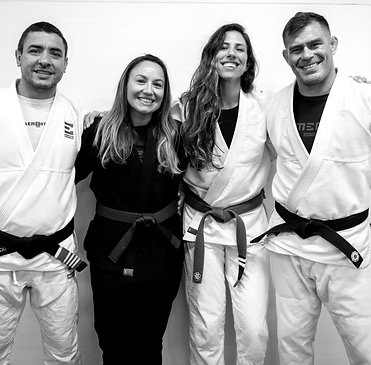
Walking into a Jiu-Jitsu academy for the first time can feel intimidating. Everyone seems to know the routine, and you are the only one who doesn't.
That feeling is normal, and it fades quickly. Every person on the mat had a first class too.
Here is what usually happens during that first session, what to bring and how to make the first few weeks easier on yourself.
When You Arrive
Plan to get there 10 to 15 minutes early. That gives you time to check in, sign a waiver if the school uses one and find the changing area without rushing.
Someone will usually show you where to leave your things and where the mat begins. Shoes come off before you step on the mat, and they go back on whenever you walk off it, including trips to the restroom.
If you are nervous, say so. Instructors meet new people all the time and will often pair you with an experienced partner.
What to Wear and Bring
You don't need to buy anything before your first class. Comfortable athletic clothes work for most trial sessions.
- A fitted T-shirt or rash guard and shorts or athletic pants without zippers, pockets or buttons
- A water bottle
- Flip-flops or sandals for walking off the mat
- A small towel
Remove rings, earrings and watches before training. Trim your fingernails and toenails, too. It sounds minor, but it protects your training partners.
Some classes are taught in a gi, the traditional uniform. At Elementum, the academy lends a gi for the free trial class, so you don't need to buy one to get started.
How a Class Is Usually Structured
Every academy runs things a little differently, and classes vary from day to day. Most BJJ classes, though, follow a similar rhythm.
Warm-up
Classes often begin with movement drills specific to Jiu-Jitsu: rolling forward and backward, hip escapes along the mat and simple stance work. They can feel awkward at first. That's fine. You are learning how to move your body in a new way.
Technique
Next, the instructor demonstrates a technique or a short sequence. It might be an escape from a pin, a way to pass someone's legs or a basic submission.
Partner drilling
You then pair up and practice the technique on each other, slowly and without resistance. Partners take turns, and the goal is to understand the movement, not to win.
Live training
Many classes end with live training, sometimes called rolling or sparring. On your first day, you may be asked to watch, do a lighter positional round or skip it entirely. Follow the instructor's lead.
You Won't Understand Everything, and That's Expected
Jiu-Jitsu has a lot of positions and a lot of names for them. Nobody expects you to remember them after one class.
Focus on one or two details. Maybe it is where to put your hands during an escape, or how to keep your elbows close to your body. Small pieces add up quickly over the first month.
Basic Mat Etiquette
A few habits make you a good training partner from day one:
- Show up clean, with clean clothes, every time
- Tap early. Tapping your partner or the mat means stop, and it is always respected
- Let your partner go as soon as they tap
- Keep the intensity at a level your partner is comfortable with
- Listen when the instructor is talking
You will pick up the rest by watching how others behave.
Talk to Your Instructor
If you have an injury, a bad knee or anything else that limits how you move, tell the instructor before class starts. They can suggest adjustments or a different drill.
The same applies during class. If something hurts or a position feels wrong, stop and say so. Speaking up is part of training safely.
What to Expect Physically
Your first class will likely tire you out more than you expect. Grappling uses muscles in ways most workouts don't, especially your grip, neck and core.
Feeling sore for a day or two afterward is common. Drink water, sleep well and give yourself a rest day before the next session if you need it. If you have health concerns, check with your doctor before starting any new physical activity.
Getting Through the First Few Weeks
The first month is usually the hardest. Everything is new, and progress can be hard to see.
Try to train on a steady schedule rather than going hard for a week and disappearing. Two or three classes a week is a common starting point for beginners. Ask questions after class, and don't measure yourself against people who have trained for years.
If you are an adult starting later in life, our article on exercising and enjoying it in your 40s and 50s covers some of the questions people in that stage often have.
Starting at Elementum in Oviedo
At Elementum Jiu-Jitsu, the adult classes on our schedule are open to all levels, so beginners train alongside more experienced students. You can read more on our page for Jiu-Jitsu beginners in Oviedo or see the full adults program.
When you are ready to try it, request a free trial class. Our team will contact you to confirm a time that works for you.
Keep reading
- "I'm in My 40s - 50s ... How Can I Exercise, Stay Healthy, and Actually Enjoy It?"
- Why Choose Jiu Jitsu Over Karate and Taekwondo for Your Kids
- Why Brazilian Jiu-Jitsu is the Perfect Choice for Kids in Oviedo: A Parent's Guide to BJJ Benefits
- How to Reduce Screen Time for Kids: An Active After-School Solution in Oviedo
- How to Choose the Right Martial Arts School for Your Child in Oviedo

Ready to start your journey?
Your first class is on us. Reserve your spot and step onto the mats at Elementum Jiu Jitsu Oviedo.